.svg)
Health systems are not failing because they lack data, technology, or commitment.
They are failing because they are looking in the wrong place.
Every clinical metric, satisfaction survey, outcome measure, and patient journey map captures what systems can count and classify. What they cannot register is the actual texture of life with a condition - the vigilance, the fatigue, the shrinking of the world, the gap between what gets recorded in an appointment and what is lived between appointments.
This is a perception not a data gap.
The person with chronic pain whose experience has been reduced to a number between one and ten. The veteran whose daily negotiation with pain, identity, and civilian life exists entirely outside what any pathway can hold. The woman in menopause whose existential shift is recorded as a hormone level. These are not edge cases. They are the majority of people living with long-term conditions - and the systems built to support them are structurally incapable of seeing what they are actually living through.
This is what health systems miss. And it is costing everyone - the people whose lives go unseen, the clinicians whose instincts are overridden by protocols, and the enterprises whose innovations fail to land because they were built on an incomplete picture of reality.
Real Lived Experience (RLX) is what lies in that gap.
And it is where the most important opportunities in health and care now live.

What gets missed
Clinical data, outcome measures, and patient surveys capture what systems can classify. They cannot register the texture of daily life - the vigilance, the fatigue, the shrinking world, the gap between what is recorded and what is lived.

Why it matters
This is not an edge case. It is the daily reality of hundreds of millions of people living with chronic conditions - and the enterprises and systems built to serve them are working from an incomplete picture of what is actually happening.

What changes when you see it
Real Lived Experience (RLX) reveals the dimensions conventional frameworks miss - and opens new possibilities for innovation, care, reimbursement, and strategy that cannot be reached any other way.
What RLX makes possible
Deeper Insight
Reveals the real dynamics of experience beneath surface needs and reported behaviours - what is actually shaping how life is lived.
Stronger Relevance
Generates responses attuned to how people actually live, not how they perform in systems or describe themselves in surveys.
Relational Fit
Designs with the full ecology of experience - body, place, relationship, technology, environment - making solutions feel integrated rather than imposed.
Transformational Impact
Does not just improve existing systems. Supports new ways of being, relating, and becoming - meaningful change rather than incremental adjustment.
The health and care companies that will lead in chronic condition markets are not those with the best products. They are those with the deepest understanding of how life with a condition is actually lived - and the sharpest ability to translate that understanding into innovation, strategy, and evidence.
Working with Real Lived Experience gives organisations three things their competitors cannot easily replicate.
It reveals what conventional research misses - the hidden variations in lived need, burden, and possibility that standard segmentation and metrics cannot see. This is where genuinely differentiated innovation begins.
It directs R&D and concept development toward outcomes that matter in real life rather than outcomes that are simply measurable. The result is less wasted investment and stronger resonance at launch.
It builds a new kind of evidence - grounded in how health is lived rather than how it is clinically classified - that supports more compelling reimbursement, market access, and value arguments in an environment where payers are increasingly questioning whether conventional outcome frameworks capture what chronic care actually requires.
This is not incremental improvement on existing methods. It is a different foundation for growth.
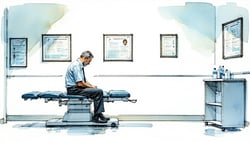
Chronic pain isn’t just a health condition. It’s a lived reality that touches every part of a person’s being - body, memory, identity, space, time, and relation. And yet, most systems and tools designed “for pain” reduce it to data, symptoms, or tracked inputs. They miss the texture. The complexity. The felt reality of living through pain - every day.
Here is how RLX differs and helps.
Surfaces the invisible
Design with RLX reveals what isn’t usually captured in clinical forms or digital tools:
- The ebb and flow of pain across time and space
- How pain interacts with memory, mood, energy, and environment
- The social and spatial isolation that pain creates
- The tensions between coping, masking, and expressing
Real Impact
People feel seen - not just as patients, but as lived realities in motion.
Supports expression without translation
People in pain often struggle to articulate their experience in words others can understand.
Design with RLX enables non-verbal, spatial, temporal, and visual forms of expression.
Real Impact
They no longer need to “explain” their pain. They can express it - and have it recognised.
Reveals patterns and conditions
Using Umio services and tools like Bergson or Ooex, Design with RLX helps map:
- What triggers pain
- What soothes it
- What kinds of interactions or rhythms amplify or ease it
Real Impact
People begin to perceive the conditions shaping their pain, giving them agency to shift them - gently, and with support.
Enables real-time insight and care
Rather than asking people to recall or track pain as data, Design with RLX supports sensing and responding to what’s happening now.
Real Impact
People gain tools to respond in the moment - through movement, environment, relation, or rest - rather than pushing through or collapsing into suffering.
Creates space for co-regulation and relational support
Pain isolates. But RLX design enables shared perception of experience - among carers, clinicians, peers, or loved ones.
Real Impact
Others can feel with the person in pain - without needing to “fix” them.
This reduces isolation and restores a sense of shared meaning.
Builds new capacities
Design with RLX doesn’t just help people “manage” pain. It helps them:
- Re-orient their attention
- Tune into micro-movements of ease
- Create rituals or environments that support re-becoming
- Discover new ways of living with their body
Real Impact
People feel less trapped by pain - and more able to move, express, and engage on their own terms.
In short, Design with RLX doesn't offer a cure for pain. It offers a shift. It helps people living with chronic pain:
- Be more deeply perceived and understood
- Understand and express their experience
- Rebuild trust in their own sensing
- Shift how they relate to pain, place, time, and others
- Co-compose new rhythms of care, creativity, and connection
This isn’t about managing pain better. It’s about designing with the reality of pain so that people can reclaim life from within it. And that - in the context of pain - is a real impact. Not just in design terms, but in life terms.

Menopause is more than a hormonal shift. It is a relational, embodied, and transitional experience - one that reshapes identity, rhythms, memory, intimacy, and time. Yet most design responses to menopause focus on hormone levels, symptoms, standardised interventions and lifestyle advice or clinical “management”. What’s missing is a way to truly perceive what menopause feels like - and what it does to the texture of someone’s life.
Here is how RLX differs and helps.
Recognition Beyond Symptoms
Most women navigating menopause feel unseen - either over-medicalised or completely ignored.
Design with RLX enables them to express their experience in ways that aren’t flattened into checklists or stigma.
Real Impact
Women feel recognised and reflected in all their nuance, contradiction, and power - not reduced to “hot flashes” or “hormonal imbalance.”
Space to Express What’s Hard to Articulate
Menopause often brings emotional, relational, and existential shifts that are hard to explain - grief, rage, freedom, disorientation.
Design with RLX makes room for expression without requiring translation into clinical or social language.
Real Impact
Women can express what they’re actually living through - on their own terms, in ways that feel safe, true, and creative.
Mapping Invisible Transitions
Using tools like Bergson or Ooex, Design with RLX surfaces how menopause intersects with place, work, intimacy, memory, and identity - revealing changes that aren’t tracked by apps or spoken in clinics.
Real Impact
Women begin to see patterns in their own experience - what’s shifting, what’s grounding, what needs to change.
New Language and Meaning
Menopause is often framed as decline, dysfunction, or invisibility.
Design with RLX enables women to re-narrate the experience as a process of becoming - even if uncomfortable or disorienting.
Real Impact
Women find language, metaphor, and design forms that give meaning to their transitions - reframing menopause as generative, not just disruptive.
Support Without Fixing
Instead of trying to “treat” menopause, Design with RLX co-composes conditions for ease, restoration, creativity, or connection - based on the woman’s own relational ecosystem.
Real Impact
Women feel supported rather than solved - able to shape their rhythms and responses with more agency and clarity.
Capacity Creation
Design with RLX doesn’t just accommodate change.
It helps grow new ways of sensing, relating, and moving through the world - even in uncertainty.
Real Impact
Women gain new capacities - to feel differently about their bodies, to ask for what they need, to design new forms of care or community.
Community and Relational Perception
Through shared RLX tools or platforms, women can connect with others experiencing similar transitions - not through comparison, but resonance.
Real Impact
Menopause becomes less isolating - more of a shared becoming, with language and care that can evolve in community.
In short, Design with RLX doesn't see menopause as a condition to be managed. It's a life passage to be recognised - and co-designed with. It helps people experiencing menopause to:
- Feel recognised
- Express the inexpressible
- Make sense of change
- Design new rhythms of life
- Reclaim meaning, beauty, and agency
- Transform not just how they live, but how they are seen
Design with RLX helps make the menopause visible. It supports care, creativity, and transformation from within the experience itself. And that - in the context of menopause - is a real impact..